Monday, 9 November 2015

Baroque and Rococo Fashion

Baroque and Rococo were one of the most glistening eras of the fashion history which might never return. The gilded elaborate clothing and the heavy Renaissance influence makes the eras stand out completely. Here is a look at these bygone eras. These eras existed from 1650-1800s. 

BAROQUE ERA (FASHION)

The classical Baroque era shined in all aspects of art, culture, architecture, fashion under the reign of Louis XIV. This was an extremely luxurious era with rich fabrics, colors textures and curve accentuating silhouettes. The clothing had a lot of surface ornamentation such as use of lace, sequins, pearls, gold embroidery. There seemed to be growing a new bourgeois class who followed nobility fashion fervently. Fashion Designers were on the rise about this time and bespoke dressmaking was indulged in by all. Women wore tighter corsets and flowing gowns with high cinched waistlines. The plunging neckline called the decolletage became overtly popular among women and was sometimes covered with a scarf tied at the bosom for modesty. This was also the period in which women wore two skirts, one the under skirt for giving the structure over the bustle and on top of that was the over skirt which usually was open-front and had a train behind. Lace, Brocades and Ribbons were very common element of decoration. Makeup was used by all of the women and not only courtesans like before. The most common was rouge on the cheeks and lips. Women even started wearing heels and minimal jewelry.


Cavalier style for men was very common during this era with tight patterned breeches, knee high boots with turned down lace trimmings, wide brimmed hats with feathers were common among the bearded romantics. 
Square-toed high heeled boots were very common along with riding cots with puffed sleeves. Men continued wearing wigs too.


ROCOCO ERA (FASHION)
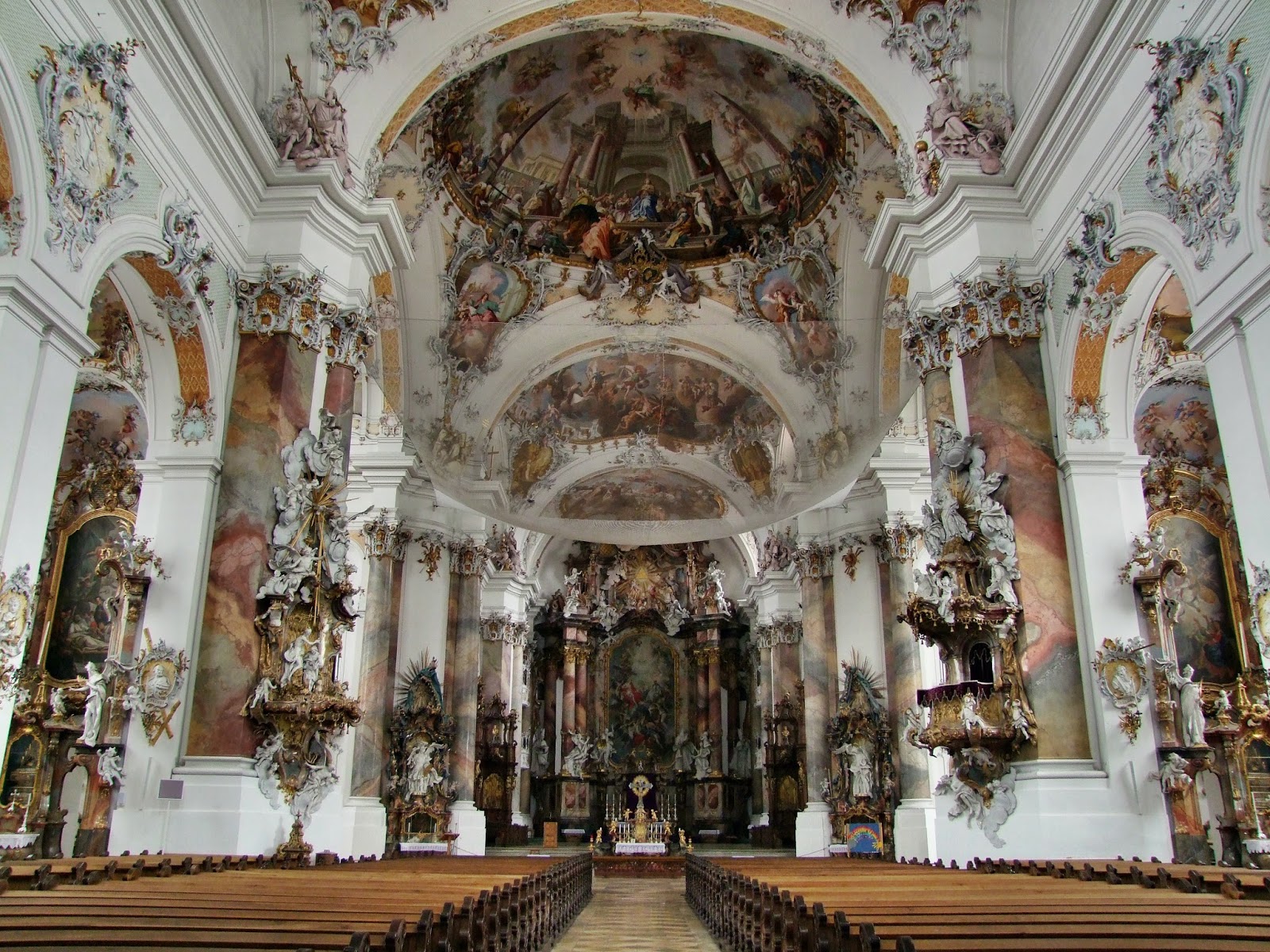


Fashion became excessively elaborate and shifted from Versailles to Paris. The raging fashion had an impact not only on royalty and aristocrats but also on middle and lower class. The most important figures of fashion during this era were Madame Pompadour and Marie Antoinette. Madame Pompadour was the promiscuous mistress of Louis XV. She established Rococo fashion adorning a lot of pastels and floral patterned flowing silhouettes with plunging necklines and feminine forms. This light and happy style came to be known as Rococo. Fashion magazines were very popular among the aristocrats and later among the lower class. Rococo spread from France to other European countries as well. For instance the Robe e la Francaise, Robe e la Anglais and Robe e la Polonaise were staple fashion across countries. Later the extravagant Marie Antoinette along with her dressmaker Rose Bertin became fashion icons eventually leading to the French Revolution.


Women wore sashes tied at neck like Marie Antoinette with everyday gowns. Wide hoops and panniers were worn extensively with formal wear. This look gave the illusion of full lower skirt and very tight, cinched upper bodice with a structured corsets. Heels became slimmer and higher with dainty decorations. Women wore flowers, feathers, jewels and other accessories with their extravagant and towering powdered wigs.


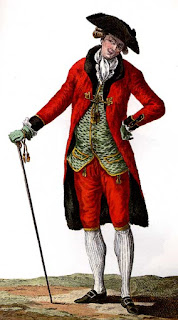

Men's fashion didn't go under great changes from the Baroque period. Except coats became more structured and not as flowing and had further elaborate designs on them. The breeches worn shortened in length worn till the knees with high white stockings showing their slender legs. French aristocrats and royal men who dress in an extensive and dainty manner came to be known as the Macaronis and were often mocked by the lower societies. The middle and lower class during the French Revolution showed a lot of patriotism in their fashion wearing a lot of reds, blues and whites from their national flag. As this era highlighted the beginning of the French Revolutions, the fashion held a lot of importance in future decades.

Reference : https://historyofeuropeanfashion.wordpress.com/category/baroquerococo-1650-1800/
Photo Credits : Pinterest 

Tuesday, 3 November 2015

Contrast emotions evoked from a single image (Visual Research)


This picture was captured on August 9, 1945 with America initiating a nuclear attack on Nagasaki, Japan during the end of WWII.  The reason I chose this picture because somehow it evokes contrast emotions. It highlights the horrifying devastation and doom of the catastrophe but at the same time the cloud formation several feet above in the sky creates a beautiful imagery. The enveloping cloud in a mushroom form looks serene yet scary. There is a natural beauty in the clouds floating and taking a certain shape but the it even is a proof of one of the most tragic event of all times. 

Tuesday, 20 October 2015

Ancient Egyptian Clothing

EGYPTIAN CLOTHING


Ancient Egyptian costumes mainly focused on lower body garments than upper body counterparts. Hence, most of the civilization had bare body with a skirt or any drape garment underneath. Due to the extreme heat in this region, they tend to adorn light translucent preferably cotton garment covering their hips. Until later the New kingdom, when robes were worn.
The Egyptian clothing combined beauty and comfort together.


The uniqueness of the garments of this civilization was the numerous pleats seen on the draped garment. A simple loin cloth which was the oldest draped male garment was known as SCHENTI. It was a single strip of linen draped around the hips differentiated by ranks among people. For the Pharaohs, this cloth was much finer, elaborate and pleated. And often accessorized with a tail representing their spirit animal. 


In later periods the length of the skirt grew longer varying from mid-length to calves. The men and women extensively started wearing tattoos, wigs, cosmetics and jewelry. Even the royal ones adorned cosmetics.
Egyptians wore sandals in the later kingdom. The nobility wore sandals made of leather and the common people wore sandals made of papyrus.


Royal men wore a draped elaborate material with folds at shoulders and hips called the royal HAIK. 
The clothing was mainly unisex but women wore a sheath like tunic with thin pleats called KALASAIRES and sometimes a cape on it too. Egyptians even adorned religious and ritualistic garments like their shawl. For modest reasons these were sometimes held by one or two straps too. Of course the lengths of these dresses denoted social classes and ranks too.
The children more than usually wore no clothing at all. 

This are few of my illustrations reflecting on Ancient Egyptian clothing.


Picture Credits : Pinterest
References: https://en.wikipedia.org/wiki/Clothing_in_ancient_Egypt
http://www.historyonthenet.com/egyptians/clothing.htm

Monday, 5 October 2015

Ancient Near East Costumes

At various periods of time in history, clothing with different cuts, silhouettes, colours, fabrics in started developing in certain places and parts of the world. Some costumes were important for leading civilian lifestyle while others were designed to meet the specific functional  and practical requirements. Elements of one genre of clothing permeated into another over centuries. Draped costumes were essentially one of the common archetypes which were seen in past cultures of Mesopotamia, Egypt, Greece etc.

Sumerian Costumes

Inhabiting Mesopotamia as an ancient civilisation, Sumerians started wearing draped garments. These were simple ankle-length wrap around skirts adorned by both men and women alike. There was a certain kind of commonality in draping methods. The Sumerians wore a particular 'Kaunakes' skirt which had to be tied back at waist level with a broad width waistband forms. 


Christian Dior inspired by the Sumerian skirt showcased a haute couture garment in Fall 2013.

Babylonian costume

The Babylonians further developed the draped Kaunakes into a thicker tougher version. These were worn under shawls. The shawls were lined with fringes and tassels. The drapes complicated with fabrics over the shoulder or under the armpits. They are seen to be pinned to in few statuettes.  A significant difference was the drapes were elaborate among nobilities but the lower rank simply wore linen skirts. 


London Fashion Week Summer 2009 had a Babylonian costume inspired gown.

Assyrian Costumes

Assyrians had further ornate and decorated garments than the Babylonians. Assyrians draped elaborate shawls with short sleeve tunics. These were either rectangular or semi-circular. These shawls were worn like aprons, tied a the back and belted at the waist. The fringes and tassels edging along these extensively decorated shawls also portrayed ranks of the civilians. Two belts were sometimes cinched to hold the tunic and shawl in a particular position as none the garments were stitched. 


Tuesday, 29 September 2015

Renaissance Period

The Renaissance

‘Renaissance’ literally comprehending the ‘rebirth’ era succeeding the horrendous Dark Ages, was a new beginning and a boom of literature, religion, politics, art, architecture, culture and fashion. Seeding in Italy and France, this cultural movement soon spread all over Europe. Renaissance represented a bridge built over the chasm of the traditional Middle ages and the new Modern Era. 


The philosophy of scholars and scientists in this era was forward and challenged religion in a new way. The origin was known to be 14th Century Florence under the patronage of the Medici as Greek scholars and philosophical thinkers migrated to Italy. 


Hence, power shifted to the hands of Italy with the Fall of Constantinople caused by the Ottoman Turks. The Islam reign flourished trades especially in Florence and other Italian cities, thanks to the Ottoman. Hence, we see Islam influence in the Renaissance architecture with their domes and Greek influence with their triangular structures. Renaissance saw the fusion and birth of a new art and architecture. This made Europe the capital of art, architecture and culture. 


Intellectual theory like the Humanism was born, scientific theories and discoveries highlighted the period and art enhanced in a new form and expression. Raphael, Michelangelo and Botticelli were few of the greatest Renaissance artists who bought realism and human emotion to the art. The human anatomy was a common underlying subject in the art and literature of the period. 


The sacrificing contributions of Galileo and Copernicus proved to be ground breaking for science and philosophy. Baroque art and music were also birthed in this era. A new self- awareness and Individualism spread through this era. 


The costumes underwent a change too. Extravagance and opulence was seen in the costumes. People with power and wealth showcased the trends and the clothing was a representation of their social status. Silk, velvet, wool and other luxurious fabrics with padded clothing, voluminous wigs and tightened corsets were adorned. Men tend to wear short length hair with a flat cap tilted up on one end. Women wore handkerchief and headdresses on occasions. 


Colours used were much darker, richer and bold like burgundy, gold and purple. Funnel and Leg-o-mutton sleeves were common along with the tight elaborate stockings. Lace, ruffles and intricate ornamental embroidery were common in Baroque fashion. As the society grew liberal, décolletage and flowing garments were more accepted.


Strings of various stones like pearl and diamonds were worn with ribbon among various women. A particular fad of having immensely high foreheads was common among the females too. The women’s garment structure seemed to be rounder or fuller with very narrow and high waistline. 


Fur lined garments along with accentuated tunics were common among men. The cuffs started to become elaborate too. Women powdered their face extensively with lead and rosy tints to achieve optimum beauty. Hence, luxury highlighted the glorious era of renaissance in several aspects of the society which highlighted a certain freedom. 

The medieval era

The Medieval Era

The medieval times or the middle ages, known to exist around 5th to 15th century was not a merry time in European history. Majorly embarking the fall of the great Roman Empire and shaded times, this era has been often controversially termed as The Dark Ages. 


The term dark ages was coined and credited by renowned Italian scholar, Francesco Petrarch (1304-1374). Like other scholars, moved by the severe depressed times, with lack of literature, art, architecture, medicine, inventions and politics. 


So how hopeless and dark were the Dark Ages actually? Honestly, they were one of the worst times seen by the European empire. With the major fall of the Roman Empire clutched in the eye of the storm, the doomed times spread like a plague across the world. As the Roman Empire was known as the mother of the Empires, so definitely the major and sudden destruction shook not only Rome but the world to its core. Greece, Turkey, Palestine and Egypt were majorly affected. It was a fall of the civilization.


This destruction started with Gothic German soldiers riding into Rome trampling the lives of the royalty and the folks. The barbarian invaders, spread despair throughout Rome. This period highlighted illetracy, barbarism, cannibalism, mass homicides, starvation and further horrific crimes. People were crusaded and murdered in the streets. The pavements were stained with blood and filth for there wasn’t even proper sewage disposal. Buildings and monuments were burnt to ashes. The Roman architecture came falling down. Monuments were quarried for quick and simple building materials. The structures couldn’t sustain. Uncertainty was spread throughout, no one knew what steps to take and how to survive. Corpses lied exposedon the streets, once royalty now lived in shacks. Uncouth behaviour was common for obtaining food. People murdered each other to survive or even ate human flesh. This is why these times were called Gothic Times. The economy was doomes, so was politics. There was no government, emperor or state. No one knew how to live or survive this nightmare. 


Paganism and other occult religion were on the rise around this time. With no government to save, feudalism and vendetta was very common. The Colosseum also succumbed destruction, it became shelter for the destitute, a urinal and home to pack of animals. The times were further horrific and the society went in a downward spiral. Around this time Islam domination moved forward and Muslims ruled Spain and Italy. Hence, started a huge feud between Christians and Islam. Crusades were bought in to invade Islam rulers and ward them of from the land. These were also the times of cruel slavery and labour. The taxes were heavy as the Church started rising as the ultimate power. Forcefully, turning people into Christianity. They exploited money and power immensely. Byzantine Empire and Constantinople could only save Rome at this time.
Gothic architecture inspired by the Islamic world was contructed bringing down the heavy Romanesque style. Hence, this was also a start of the Renaissance. 


Later an even worse enemy attacked Rome, the Bubonic Plague. This deadly plague killed millions of people. Nearly half the population died victim to this plague, which spread across Europe like a wildfire. 


The art and architecture in this period was Gothic and Byzantine inspired. There were also Romanesque carvings around the city. But because of less stability and prosperity art and literature didn’t flourish much.  Greek inspired Byzantine art and French inspired Christian art whereas Islam inspired the mosaic art.


Dante was one of the greatest poets of the medieval times.


Fashion during the medieval times was very functional. It majorly showed the difference between nobles and citizens. The length of tunics worn by men and women was of most importance. Jewellery was very minimalist, mostly used in brooches and belts. Usually linen or silk tunic was worn. No rich and luxurious materials or colours were adorned.  The courtesans and burlesque dancers had different attires to lure men and acquire wealth in the time of need. Different sigils were used depending on the ruler. The Church usually dictated the clothing and the type of footwear that needed to be worn. Tunics usually hung loose and undefined, sometimes belted once or twice at the waist. Sleeves were widened and hanging of the shoulder. The length of the tunics wee decreased for mobility among citizens. A chemise was usually worn under the tunic. The elite wore tassels and girdles. The warriors wore broigne and baldric as their armours with heraldic symbols. Hats and veils also grew popular around this time. 


The length of the footwear also represented rank. Rectangular or semi-circular shawls were draped frequently. Worn like an apron and tucked at the belt, the shawl was multi-functional.  Sometimes two belts were worn to hold the shawl. The amount of fringe edging also indicated status. Men usually wore Toga with certain stripes and women usually wore equivalent Stola draped over with a Palla. These were the regular costumes of the medieval period.